BALKAN AS A METAPHOR IN THE FILM COMPOSITION OF GORAN BREGOVIC
page 8 of 12
CHAPTER VI CONCLUSION:
Metaphoric use of Balkan Music as Bregovic Compositional Formulae; loss of mother-tongue and development of recycling and collage techniques
RECONTEXTUALISATION OF KUSTURICA’S THEATRICAL DEVICES AS CONCEPTUAL FRAMEWORKS FOR BREGOVIC’S SOUNDTRACK COMPOSITION
Bregovic’s conceptual framework for development of world film soundtracks was largely extrapolated from recontextualisation of the techniques applied in composition for Kusturica’s films that share many similarities despite their historical and geographic setting. Comparative observation of Time of the Gypsies and Arizona Dream shows many such examples.
Both film locations are similar because of their isolation from the outside society. The Macedonian Roma ghetto Suto Orizari appears just as cut off from the rest of the world as does the little farm in the Arizona desert. In both cases we hardly ever see the characters interacting with the dominant ideology.
The character similarities are even more interesting:
Perhan is a young Gypsy dreamer, Axel is his American equivalent. Perhan has a pet turkey and Axel works with fish. Both turkey and fish become more than the character’s theatrical devices, these are the most powerful visual symbols in the given films. Axel’s fish wanders through his imaginary Alaskan landscape, just like Perhan’s immaculately white turkey flies into the highest spheres during the last moments of his life.
The connection of Perhan’s wife Azra and Axel’s second lover (and his first lover’s daughter) Grace is not as obvious, but is still strong. Both Azra and Grace stand by Perhan and Axel through most of their difficulties and are in many ways the strength and courage that is waiting for them on the other side of their turbulent reality. Both Azra and Grace die, and they are the purest most innocent losses in these films.
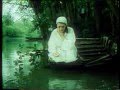
Kusturica uses many similar theatrical devices for these two characters; they are both in white in their death scene, they die on a stormy night and their white veils or hats fly symbolically across the sky.
Elaine is a strange female version of the mafia boss Ahmed. Although she is not involved in the mafia as wee see it in Time of the Gypsies, her weak neurotic character is contributing to the destruction of Axel, just like Ahmed is slowly destroying Perhan.
Although Perhan’s grandmother Hatidza is a much stronger symbol of stability than Axel’s uncle Leo, they are both equally representative of the previous generation and their love and warmth towards the children/grandchildren. Grandmother and Leo connect in their relationship towards the destructive characters (grandmother’s lack of trust towards Ahmed and Uncle Leo’s strong dislike for Elaine).
Axel’s best friend Paul and Perhan’s uncle Merdzan are both portrayed as similarly neurotic womanisers. Although Axel and Paul are much friendlier than Perhan and Merdzan are, in both instances the dynamics between the given characters are highly reliant on the outlandish vibrancy of their turbulent love-hate, support-rejection relationship. It is almost as if those supporting characters capture the essence of the socio-conceptual principles behind the complexities of both Yugoslav and particularly Bosnian (and Sarajevan) societies.
Finally, one of Kusturica’s most important re-appearing theatrical devices is the presence of live musicians. This is also an important contributing factor for the soundtrack composer as it signifies that the cultural traditions are supported through the appropriate source music. The Mariachi of Arizona appear in a similar fashion to the Gypsy brass band in Suto Orizari. These live musicians follow the joys and pains of the characters; they are the ever-ready musical commentary to the given dramatic development. Besame mucho (Many Kisses), an old Mexican traditional song from Arizona Dream has its theatrical equivalent in the Roma number Alo mange liloro (Black Train) from Time of the Gypsies.
The main characters of both films have interesting skills or at least unusual hobbies. Perhan spends most of his time practising his tele-kinetic skills, while in Arizona Axel becomes obsessed with making his lover Elaine a flying machine. Both Axel and Perhan also have a huge intuitive internal world. The symbolism of their dreams creates the most powerful messages in these films.
In the final scene of Arizona Dream we see Axel and his uncle as two Alaskan Eskimos. The fish from Axel’s dreams slowly descends into the sky, accompanied by the soft sounds of In the Deathcar in the background and signifies the end of growing up – the nightmare that separates children from adults. Contrary to the dream in the closing scene in Axel’s opening scene dream we see a young Eskimo who barely survives crossing the frozen lake – signifying that Axel has not yet made it through the dark nightmare that separates children from adults.
In one of Perhan’s dreams during his stay with Ahmed and his mafia we see his pet turkey appearing on the window as if it was trying to warn him. Hatidza, Perhan’s grandmother plays with a blood-red ball on the main square in Milan while next to her wee see a moving petrol tank. In the next scene we are back in Perhan’s house where both Danira and Hatidza don’t seem to be able to see Perhan. There is a little statue of the church from the main square in Milan on the kitchen table. Danira is circling around it with a ball of twine that is tied around the little statue. The ball of twine is a guiding symbol that leads the hero back home as suggested in the Greek mythology. Perhan walks into the house followed by the moving petrol tank and grandmother hugs the tank without any notice of her actual grandson. We also see the house and the whole yard burning down together with the image of Perhan’s burning white shirt hanging on the washing-line. The petrol tank stands next to the burning house that is slowly ascending tied on a rope.
The first time that we see the house tied on a rope is in the scene of Perhan’s uncle Merdzan begging his mother to help him pay the debt from gambling. As the family tries to explain that there is no money Merdzan ties the roof of the house to a thick rope that he connects with his little van and drives until the house is suspended in mid air. In Perhan’s dream wee see a similar suspension only the house is also burning – signifying that this type of blood money earned from stealing and child-trade brings even more destruction than gambling. Perhan’s internal world is musically portrayed by his favourite tune –The Italian Song.
Another interesting theatrical device that also creates a lot of the source music for both films is Kusturica’s use of the piano accordion. In Arizona Dream we frequently see and hear Grace playing the so-called Snake Charmer’s Tune while Perhan’s accordion performance is the introduction to the Italian Song (which he also plays on the piano, in the scene of the house robbery).
Bregovic’s compositions are more than just pompously chaotic, overly orchestrated Gypsy extravaganza – his every work is a huge musical laboratory of the intricate Balkan issues. This interest in human conflicts gives him the intuitive knowledge that “when the cultural connotations of any composition are stripped from that particular piece the audience is still left with the musical flow of events concerned with essential human emotion universal to any person.”
Bregovic’s adapted and recontextualised music, very much like Popa’s translated poetry gains bluntness of expression that is propelled even further in translation.
If we take into account that explicit emotionalism is a cultural quality in the Balkans and the Mediterranean, is it possible to say that such musical characteristic in the soundtrack heightens the realism of the given film?
Balkanisation of the Arizona Dream soundtrack heightens the realism about the issues of tolerance and equality in any society. The director’s use of fantasy elements and the violent emotionalism of the soundtrack music push these issues into some painfully appealing dimension because of their bold qualities.
Hughes (1978/79, p.3) described Popa’s and many other Slav and Mediterranean artists’ poetry as writing which utilises the formula of “the return to the simple animal courage of accepting the odds.”
Popa’s poetic formula is not very different from Bregovic’s musical concepts that heighten the conflicts portrayed in Kusturica and other director’s films to the point of brutal emotionalism.
It’s a formula that melts Bartok and jazz, tango and Slavic folk, Turkish suggestions and Bulgarian vocals, Orthodox sacred polyphony and modern pop beats.
(Fabretti, 2003)
The brutality of the Queen Margot story line is replayed in its violently emotional soundtrack utilising the described elements. Bregovic musically portrays everything to the extremes – ranging from the gentle sadness of Margot’s love and loneliness, through Henri and La Mole’s courage to the cruelty of the Medici family.
Even in the local Yugoslav production Time of the Gypsies the Roma and Gadje soundtrack principles heighten the character duplicity and replay the conflict in its own cultural and ethnic musical idiom.
Bregovic’s music does not only “support” the given dramaturgy, it replays (or perhaps more appropriately “resounds”) the given circumstances its own creative medium – this is why the ethno-cultural associations related to any traditional music are not restrictive. Instead of restrictions these qualities provide solid framework for development of musical analogies that appropriate the dramatic conflict into musical concepts. If we consider that a large body of soundtrack music is of programmatic nature because of its relationship to the depicted dramaturgy it is possible to say that Bregovic’s programmatic approach is established through specific conceptual and metaphoric principles.
Stathis Gourgouris discusses Balkan soundtracks with comparative reference between the Greek director/composer duo Theo Angelopoulos/Eleni Karaindrou and the Yugoslav-born Kusturica and Bregovic.
According to Gourgouris the main difference between the two collaborative duos is that Angelopoulos’ films together with soundtracks by Karaindrou refuse to embrace history according to one’s ideological expectations which is precisely what opens history wide within oneself.
Contrary to this, Gourgouris discusses Kusturica and Bregovic describing their films and music as connected to the most brutal realism. He suggests that even in Kusturica’s Yugoslav productions, such as Underground “the indigenous culture renders the invading culture in its own idiom”(p.340).
In Queen Margot Bregovic creates musical metaphors for Chereau’s portrayal of historical facts about the French history, while in Arizona Dream he aligns the musical metaphors of his soundtrack writing with the director’s analogies of a particular socio-dramatic problem.
Are we in the era of “Neo-Nationalism” or in the era of “Nationalism” as a metaphor?
Bulgarian academic Ivaylo Ditchev discusses the Balkans an example for his research about “National Identity in the Post National World”.
Ditchev discusses reversal of interest in the modernist figures of universalism from the Balkan region, such as dramatist Ionesco, literary theorist Kristeva or director Angelopoulos and composer Karaindrou, in favour of exclusive resellers and re-tellers of the local culture and colour such as Kusturica and Bregovic.
When you watch TV you’d say that we were never as colonised by the West as we are now. But, believe me that the Western culture has never been under greater influence of the small culture than it is now. I know this from personal examples of my music.
(Bregovic, 2002)
Closer to home, Macedonian-Australian artist Robert Sazdov (a.k.a. Maxim) works with the idea of the continuation and evolution of the traditional Macedonian music. His concepts address further development of traditional Macedonian music through creative use of tools/instruments of the current time.
Sazdov talks about his beginnings, from the discovery of music that he heard while studying at the Sydney Conservatorium to crystallising his interest in electronic evolution of the traditional Macedonian music. Further research and creative applications led Sazdov to believe that any sound or any instrument can be customised.
During the initial stages of his research in this field the world was already swept with the idea of technology being culturally non-specific regardless of which part of the world it was developed in. This creates no issue as Sazdov and other musicians in similar field use technology simply as an auxiliary transition tool – computers become musical instruments for such artists.
My interview questions to Sazdov are similar to those I would have asked Bregovic. They address the evolution of the artist’s signature-style with regards to the technique and development of any particular compositional formulae with specific attention to the altered and preserved musical elements used as source materials.
Sazdov’s signature style and the compositional formulae derive from the researched traditional music. He even describes the process using the expression “deliberate formula” to accentuate his interest and desire in the evolution and preservation of the traditional music.
Sazdov explains that he aims to avoid writing in the Western styles, but admits that none of us can fight certain subconscious influences of today’s environment and its contributing factors. He continues to research, write and rewrite in order to preserve the traditional flavour.
Bregovic still remains the most intricate “re-teller and re-seller” as he has taken the local culture over the precipice of the exclusively indigenous production and into an international sphere. His music is applicable in wider dramatic contexts because of the conceptual exploitation of the multi-layered ethnic structure of the Balkan population.
Sazdov on the other hand, conceptually synthesises the ideas of one part of the Balkans, and exposes its individuality and independence. This concept of “Neo-Nationalism” is not new and is particularly exposed in the multi-ethnic ex-Communist societies such as the former Soviet Union and ex-Yugoslavia.
Bregovic is propelled by his uncompromisingly Yugoslav vision, acknowledgment and understanding of the perpetual absurdities and inspirations of the Balkan conflict which he uses a metaphor in his cross-disciplinary work.
Sazdov’s evolution of tradition is aligned with the latest developments in the world of music and creative technology, while in his soundtrack opus Bregovic takes tradition forward on a more perceptual and conceptual level.
Bregovic has always been a controversial figure in the music world. In frequent conversations with musicians from the former Yugoslavia who now live and work all over the world I came across many different responses to his work. Many people are disappointed because he does not seem to write much new music in his film opus or for the live tours with the “Weddings and Funerals Band.” The rest of the world seems to love dancing under the stars to the sounds of the “Weddings and Funerals Band.”
The controversial ambassador’s more current creative work, his retrospective outlook on the transition from rock to Balkan ethnic music and development of hybrid genres are portrayed through “Bregovic about Bregovic” framework that is constructed from his descriptions and explanations about the evolution of his musical processes.
Significant aspects that are valuable to both my theoretical research and development of creative projects address Bregovic’s acknowledgment of the relationship between emotional, cultural and artistic connections with the homeland and his creative output.
He discusses the Yugoslav war and loss of homeland, on an emotional, artistic and creative, but not political level. Some of this discussion explains his choices to recycle music even in foreign productions. Bregovic even talks about his laziness. His discussion about the importance of mother tongue (specifically for songwriters and other text-based musicians) is particularly important.
The loss of homeland and of the opportunity to express his artistry in his mother tongue led Bregovic to collaborate with other musicians and appropriate his text-based works according to different project requirements.
Bregovic talks about all these aspects of his post-“White Button” career with funny, yet sentimental honesty.
I never liked working. My biography is a typical biography of a lazy man. As a pensioner I discovered that I liked working. I never worked in my life, except for the past two years, and that came as the result of the war. The consequence of the war is that I also do not have a homeland.
When I talk of homeland, for someone who writes songs that has different connotations then for those who simply left their houses. Of course, I left my house too, but that does not matter. In any case, I am left without homeland. That is a disability for those who write songs, because I can no longer write songs, can no longer write in my language.
That is why I only recycle songs now. I live abroad and when I give Iggy “On the Backseat Of My Car” he makes “In the Deathcar” as a result of it. I am forced to make compromised derivations; I can no longer control my materials from beginning to end.
I am extracted from my homeland, culturally, mentally and emotionally and in the beginning I was frightened and repulsed by it, but now I am enjoying it. If I look back now I feel my city and my country as some sort of a frame, and objectively a small frame, but the one I enjoyed back then.
(Bregovic in Popovic, 1996)
Both Arizona Dream and Queen Margot soundtracks show many examples of musical recycling. In the Arizona Dream soundtrack Bregovic displays several of his “White Button” songs as appropriated in collaboration with Iggy Pop.
In the Deathcar is an arrangement of Na zadnjem sjedistu moga auta (On the Backseat of my Car) from the 1979 album Bitanga i princeza (A Thug and a Princess). TV Screen was recycled from Da te Bogdo ne volim (I Wish to God I Didn’t Love You) that was on the band’s self titled album from 1984. The provocative 1986 album Pljuni i zapjevaj moja Jugoslavijo (Spit and Sing My Yugoslavia) seems to be the most resourceful source of materials that were recycled for the two soundtracks. Get the Money from Arizona Dream is an arrangement of Haj’mo u planine (Let’s Go to the Mountains).
There are several examples of recycled works from this album on the Queen Margot soundtrack. The most famous theme from this soundtrack is Elo Hi performed by Ofra Haza – this is an arrangement of the song Te noci (On That Night). The track titled La nuit that is heard in the opening film scene is an arrangement of the song Ruzica (Little Rose). La chasse – music for the hunting scene is developed from the recontextualised instrumental section of Nocas je k’o lubenica pun mjesec iznad Bosne (The Moon Over Bosnia Tonight is As Big and Round As a Watermelon).
Bregovic also recontextualises his use of various ensemble configurations.
Dreams from Arizona Dream and Le matin and Margot from Queen Margot exploit vocal writing in a similar fashion – large vocal ensembles accompany a solo female voice. In both cases the melodies are evocative of traditional Balkan and even of sacred Orthodox music –this musical quality highlights their conceptual importance and places them in the overall ideological structure of both the film and its accompanying soundtrack.
In his portrayal of the conceptual “otherness” Bregovic accentuates the traditional elements in original composition and diminishes the rock influences of his pre-existing materials. In Queen Margot we are audio conceptually brought to understand the “Orientalism” of Margot’s position through the power of her accompanying musical motives. The depth and importance of dreams and fantasy for the film characters in Arizona Dream are amplified through the quasi-liturgical qualities of Dreams.
The recycling of old materials have resulted in the recurrence of musical forms in Bregovic’s soundtrack opus. Elo Hi from Queen Margot and In the Deathcar from Arizona Dream have a similar structure. Both works are recycled from Bregovic’s pre-existing rock materials. The melodies of the verses are as similar to the old versions in Serbo-Croatian as possible because the new texts are written in other languages. Bregovic also develops the second melody that sometimes serves as the counter-part to the sung one or as an instrumental bridge between verses.
Finally, the portrayal of the “Orient-Occident” duplicity and the introduction to big “turning points” in all three films is expressed through big choral and electro-symphonic writing. The representative compositions include the two versions of Ederlezi (the electro-acoustic version heard in the scene of St George’s Day celebration and the vocal version from the scene of Azra’s death), 7/8 & 11/8 and Death (from the scene of Dooey’s journeys through Alaskan whiteness and the scene of Grace’s death) and La nuit de St Barthelemey (from the scene of St Barthelemy’s night massacre.)
Bregovic – the controversial Balkan musical ambassador also discuses those less flattering aspects of his creative history. Using informal Serbo-Croatian full of colourful expressions that describe his lack of formal musical training Bregovic talks of his work, of the democratisation of music and its accessibility to people with different levels of ability and educational background.
Fortunately we always had enough money, to pay someone who knew what I needed - I always had the best musicians and conductors. And my role was to have it all blowing around me.
(Bregovic, October, 2001)
Bregovic’s work with different aspects of traditional music has not only led him to expose the Balkan music in cross-genre collaborations, but has also provided solid ground for many other artists with similar interests and led to various further collaborations. It is also interesting that many of Bregovic’s partners from film projects have some collaborative past among themselves. One of such collaborative partnerships is between Iggy Pop and Ofra Haza.
Haza also remains one of the key musicians that inspired Bregovic to continue the work with traditional music. He frequently talks about the impact she had on his understanding of the importance of traditional music both on the world music scene and in the development of any individual musician’s creative consciousness.
I remember the first intense emotion on the MTV awards night. Can you imagine what it looks like, what a parade of stars? Ofra Haza appeared in the middle of it all. She came on all alone, dressed in a traditional costume and performed a traditional song. The night had been full of good music up until that point, but what made me say “God why haven’t we got this?” was the pride and conviction with which she performed that song. Proud that she sings a song from Yemen, the country that is difficult to find on the map, but she believed that what she had sung is valuable, worth singing that night – that is something we have always missed.
(Bregovic in Popovic, 1996)
The beautiful voice behind the most famous Queen Margot soundtrack number Elo Hi remains one of the contributing forces that inspired Bregovic to make a new creative beginning built upon recycling of his old materials. International success has not changed Bregovic’s views on the importance of traditional music. He discusses his choices through various quirky metaphors.
It’s like going for a quick bite in Macdonald’s. When you are eating seriously, you eat your food, the same with music. You listen to MTV quickly, but seriously you listen to your own music.
(Bregovic, 2002)
The second part of the title “The Sound Synthesis of the Balkans” was extrapolated from the journalist Alvaro Feito’s article with the title: “Bregovic-Sound Synthesis of the Balkans” (El Mundo, 26/04/01)
To pre-empt some of the topics from the final chapter I connected Bregovic’s techniques of appropriation to some ideas about Vasko Popa’s (the writer whose poetry I used in the creative project) work. According to Ted Hughes (see reference list) “Popa’s language is universal (and close to music, in that respect), therefore when the poetic texture of the verbal code is cancelled (in translation to other languages) the readers are left with a solid stream of events that are meaningful in a direct way.”
Gourgouris, S., (2002) Hypnosis and Critique (Film Music From the Balkans), In: D.I.Bjelic& O. Savic, Balkan as a Metaphor; Between Globalisation and Fragmentation, Cambridge, London, (part III)
Ditchev, I., (2002) The Eros of Identity, In:D.I.Bjelic& O. Savic, Balkan as a Metaphor; Between Globalisation and Fragmentation, Cambridge, London, (part II)
Paraphrasing Ditchev’s terminology for the Balkan artists promoting the local culture
Iggy Pop (Bregovic’s main Arizona Dream collaborator) appears on Ofra Haza’s album Kirya, as the narrator in Daw Da Hiya, an ethno-pop number about traditional life-style in the Middle East. For further details access: Haza, O., (1992) Kirya Shanachie Entertainments Corp./East West Records, Germany.
page 8 of 12
BALKAN AS A METAPHOR IN THE FILM COMPOSITION OF GORAN BREGOVIC - by Nela Trifkovic (Nela Trifković)